
How EVRICA Provides Value
Usage Examples of EVRICA
When developing systems that implement complex control/signal processing algorithms, it is often necessary to evaluate and debug the system while running the actual device.
EVRICA is very powerful in these situations.
The following applications are intended as usage for EVRICA.
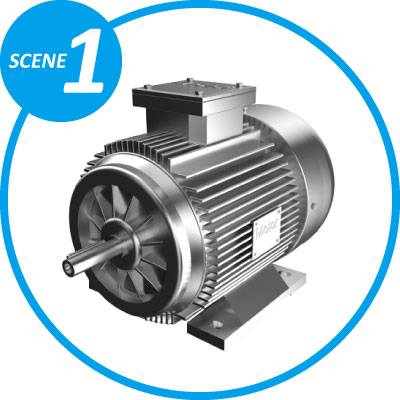
Motor/Actuator Control in Robotics, Factory Automation, and Printers
PWM control and vector control are increasingly used as control methods for DC motors in order to control the speed of rotation in detail and to ensure power savings.
In such control, advanced arithmetic processing is carried out inside the processor based on input signals from sensors and the back EMF of the motor, and signals corresponding to the results are returned to the motor's drive circuit. To verify the operation, it is necessary to analyze the details of the calculation process while the motor is actually running.
With EVRICA, changes in control variables can be visualized and recorded for long periods of time. Due to its high sampling performance, EVRICA can also keep up with high-speed control.
For example, EVRICA is useful for verifying the operation of industrial motor modules used in robots, machine tools, factory automation equipment, printers, elevators, air-conditioning equipment, transport equipment, etc., lens control and image stabilization control in camera equipment and motors/actuators in automobiles.
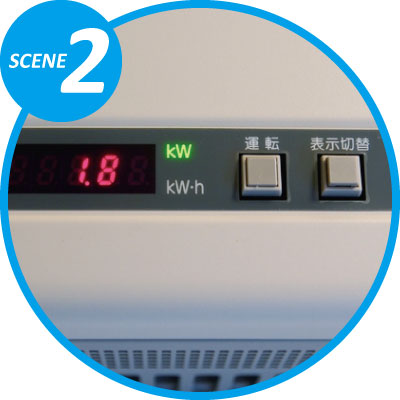
High-Efficiency Power Conversion and Digital Power Control
Solar power generation uses an inverter device called a 'power conditioner' to convert the DC electricity generated by the solar panels into AC electricity for domestic use.
The amount of electricity generated by solar panels fluctuates significantly with changes in sunlight hours, weather conditions and temperature. In order to obtain efficient and stable power, the power conditioner calculates the optimum combination of current and voltage (maximum power point) that can maximize output at any time and performs fine-tuned power control.
In such systems, high-performance processors perform the arithmetic operations of complex control algorithms. With EVRICA, the process of power control and changes in control variables can be visualized, facilitating the verification of power conditioner operation and software debugging.
EVRICA is also useful for the verification and debugging of digitally controlled power supplies, where digital signal processing controls the switching of the power circuit.
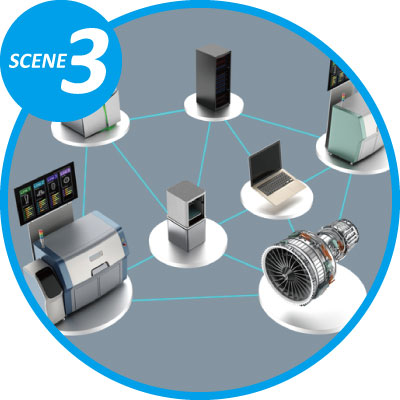
Control Systems for Factories and Plants
In factory production lines and plants, environmental sensors are often used to detect temperature, humidity, illumination, gases, vibrations, dust, etc., and the results are fed back to the controller for the best possible control. For example, environmental sensors measure the temperature of the external environment, and if the temperature falls below a specified value, the heater is switched on.
If the control needs to combine input information from a lot of environmental sensors, or if very high precision control is required, the processor has to perform complex arthmetic operations. EVRICA is also useful for such systems. Verification and debugging can be carried out while checking changes in the control variables in memory.
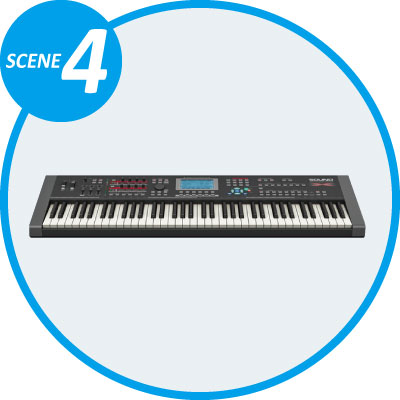
Audio Signal Processing in Electronic Musical Instruments and Audio Equipment
In the development of electronic musical instruments, audio interface devices for music production and effector devices, developers sometimes verify system operation by listening to actual sounds. For example, in the case of an electronic piano, the sound output is created by combining the data input from the sensors on the keys and pedals with the signal waveform generated by the sound source chip.
In this case, it is common for multiple channels to be sounded at the same time, even if only one sound is output, and the processor has to perform the arithmetic processing (audio signal processing) of multiple channels in parallel.
With EVRICA, it is possible to check the audio signal waveforms during the processing of each channel and record them for an extended period of time while the sound is actually being output. This allows efficient evaluation and debugging of audio signal processing software.
For the same reason, EVRICA is also useful for verifying the operation of signal processing systems that handle sound (e.g. speech synthesis systems).